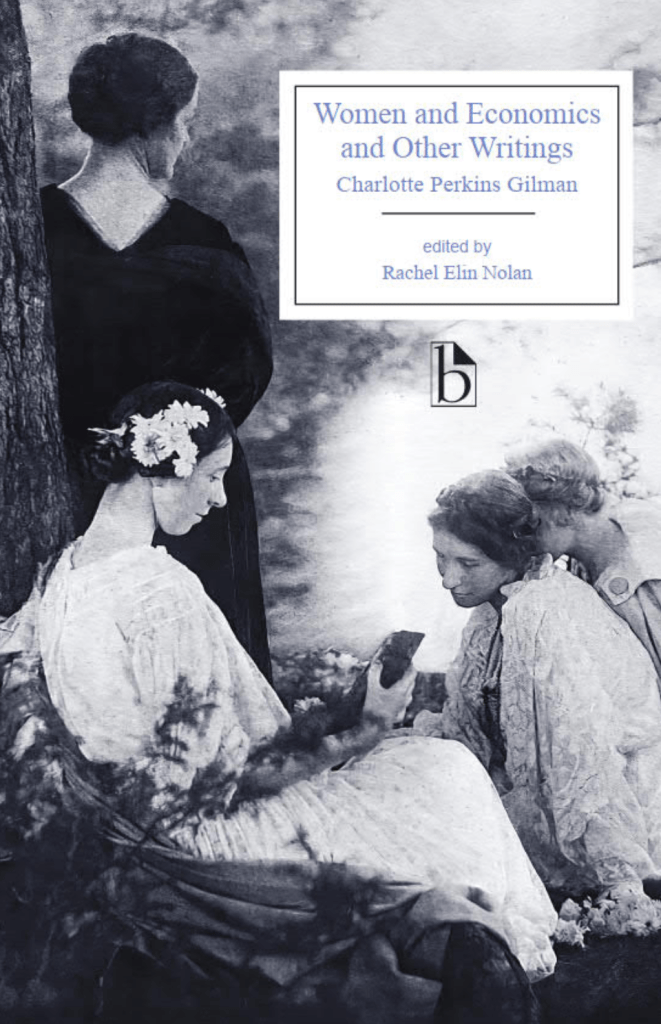
This new edition of Women and Economics highlights the importance of Charlotte Perkins Gilman as a leading public intellectual of the Progressive Era. It contains Gilman’s most influential economic analysis, including her signature idea that the relationship between men and women is at core “sexuo-economic.” Gilman applies ideas and techniques from evolutionary science to the study of marriage and the family. Her highly original approach reveals that female dependency is not a natural but rather a cultivated phenomenon. Women and Economics proposes wide-reaching social and economic reforms that were radical at the time and, as numerous twenty-first-century feminist economists continue to argue, are yet to be achieved today.
Related literary works by Gilman and historical documents allow readers to situate Gilman’s ideas in relation to larger debates concerning labour relations, the family, and women’s role in society.
COMMENT
“Anyone interested in women’s incisive—but still often overlooked—contributions to the history of economic and social thought will profit from this informative edition of Women and Economics. Well researched and reader-friendly, it situates Gilman’s classic within broader historical contexts, while demonstrating its astounding relevance for contemporary debates about gendered and economic inequality. Comprehensive additional material testifies to Gilman’s versatility and productivity as a writer and thinker, inviting modern readers to rediscover the value of literary texts for social analysis. This edition is not only an enlightening contribution to the growing corpus of works on women’s intellectual history, struggles, and defiance—it also provides inspiration for rethinking economic relations in the twenty-first century.” — Joanna Rostek, University of Giessen
“This beautifully curated collection offers a modern window into the mind of a pioneering feminist. Charlotte Perkins Gilman succumbed, at least partially, to the racial biases of her era. She was, nonetheless, one of the most creative and versatile thinkers of her day—an inspiration to the burgeoning field of feminist economics.” — Nancy Folbre, University of Massachusetts Amherst
To order a copy click HERE
 Rachel Elin Nolan